
Storage & coastal conditions
Building near the sea: questions to ask about cement and concrete
For coastal construction, the useful question is which exposure conditions the concrete must resist. A cement label alone cannot settle the durability of the complete structure.
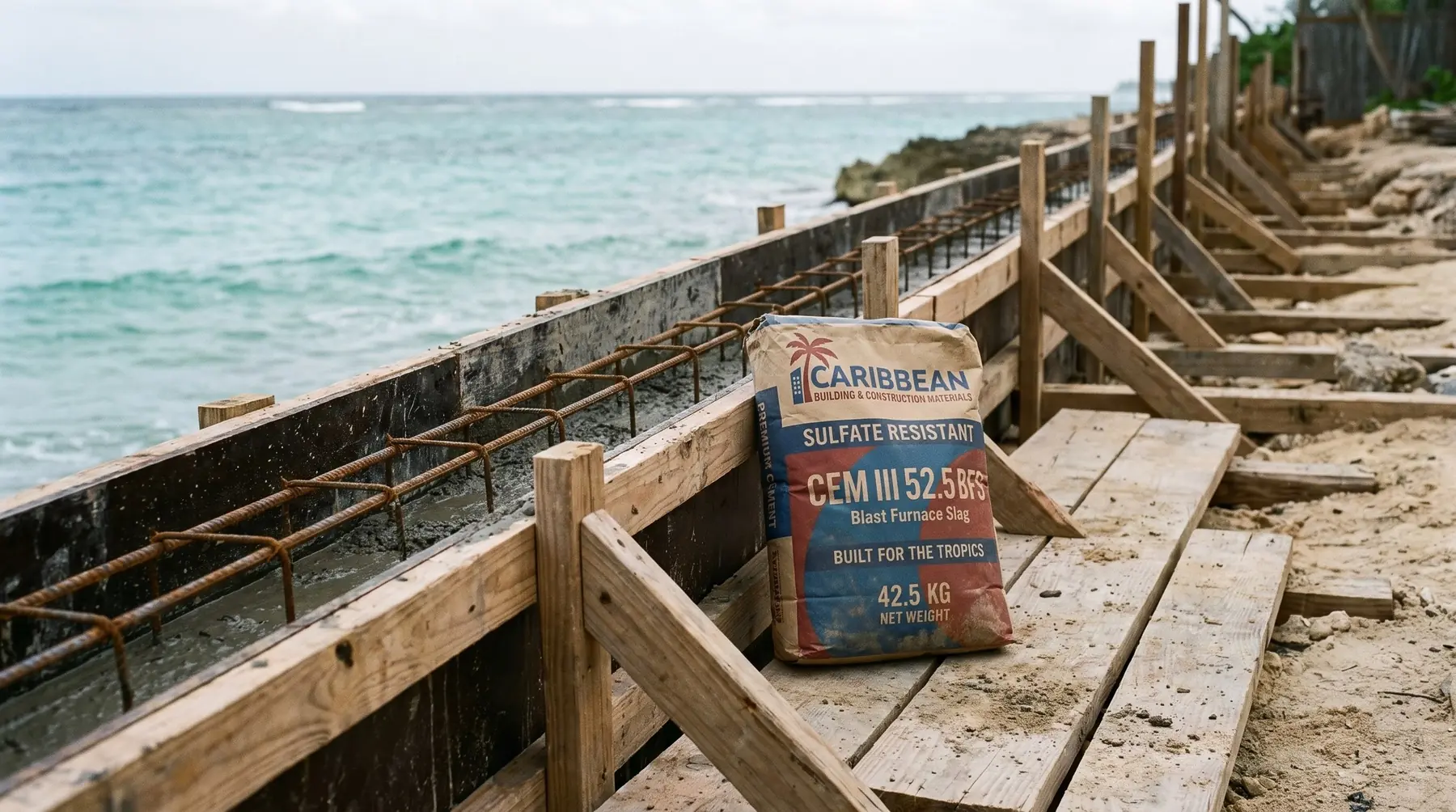
Describe the exposure clearly
Tell the project team whether the work is inland near salty air, directly exposed to spray, in a tidal area or submerged. Also identify any known soil or groundwater concerns. These details help the responsible designer determine the applicable requirements.
“Near the sea” can describe very different situations. It is a starting point for the specification, not a complete specification itself.
Keep chloride and sulfate questions separate
Chlorides can contribute to corrosion of reinforcing steel. They can reach concrete from the environment or be introduced through constituent materials. A sulfate-resistant cement designation addresses a different property.
For that reason, do not treat SR as shorthand for seawater-proof. Ask which exact cement properties and concrete performance requirements the project calls for.
Further detail: NRMCA CIP 25 — Corrosion of steel in concrete; American Cement Association — Types of cement
Ask about the whole system
The concrete mixture, cover to reinforcement, workmanship, curing and testing must suit the actual coastal exposure. Have the project team specify these together before work begins.
Use the named cement standard and full designation, including any additional property or documentation requirements. Have proposed alternatives reviewed before substitution, and retain the approved selection and quality records.
Common question
Does sulfate-resistant cement cover every coastal exposure?
No. The complete exposure and concrete specification, including reinforcement-corrosion concerns, still matters.