
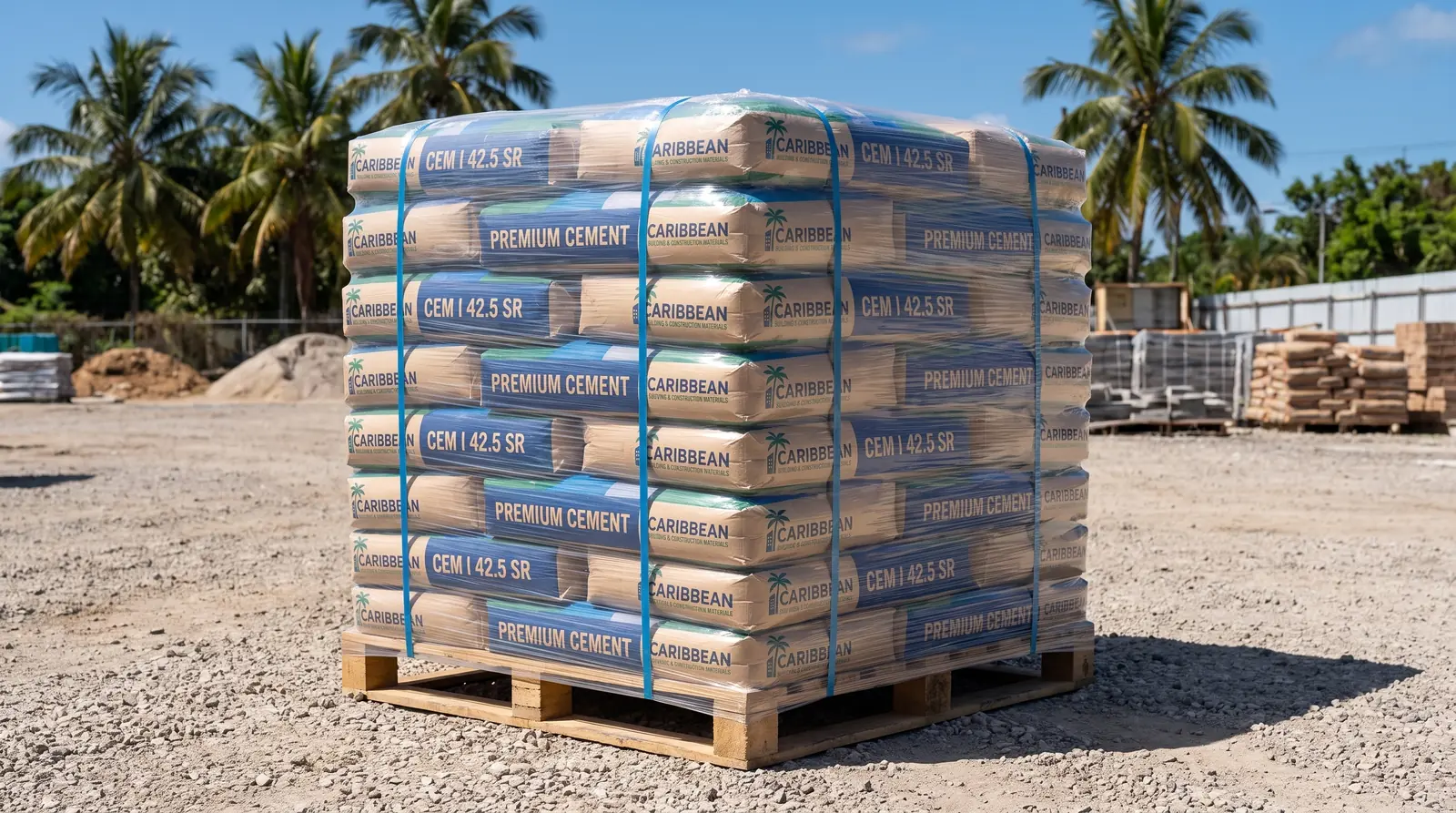
Cement basics2 min
Cement, concrete and mortar: what are you actually buying?
Cement is one ingredient used to make concrete and mortar. A bag of cement is a dry manufactured binder; it is not a bag of ready-to-use concrete.
Read guideThe cement knowledge center
Understand the cement you are buying, look after the material you receive, and know what to ask before your next order.
Explore all 36 guides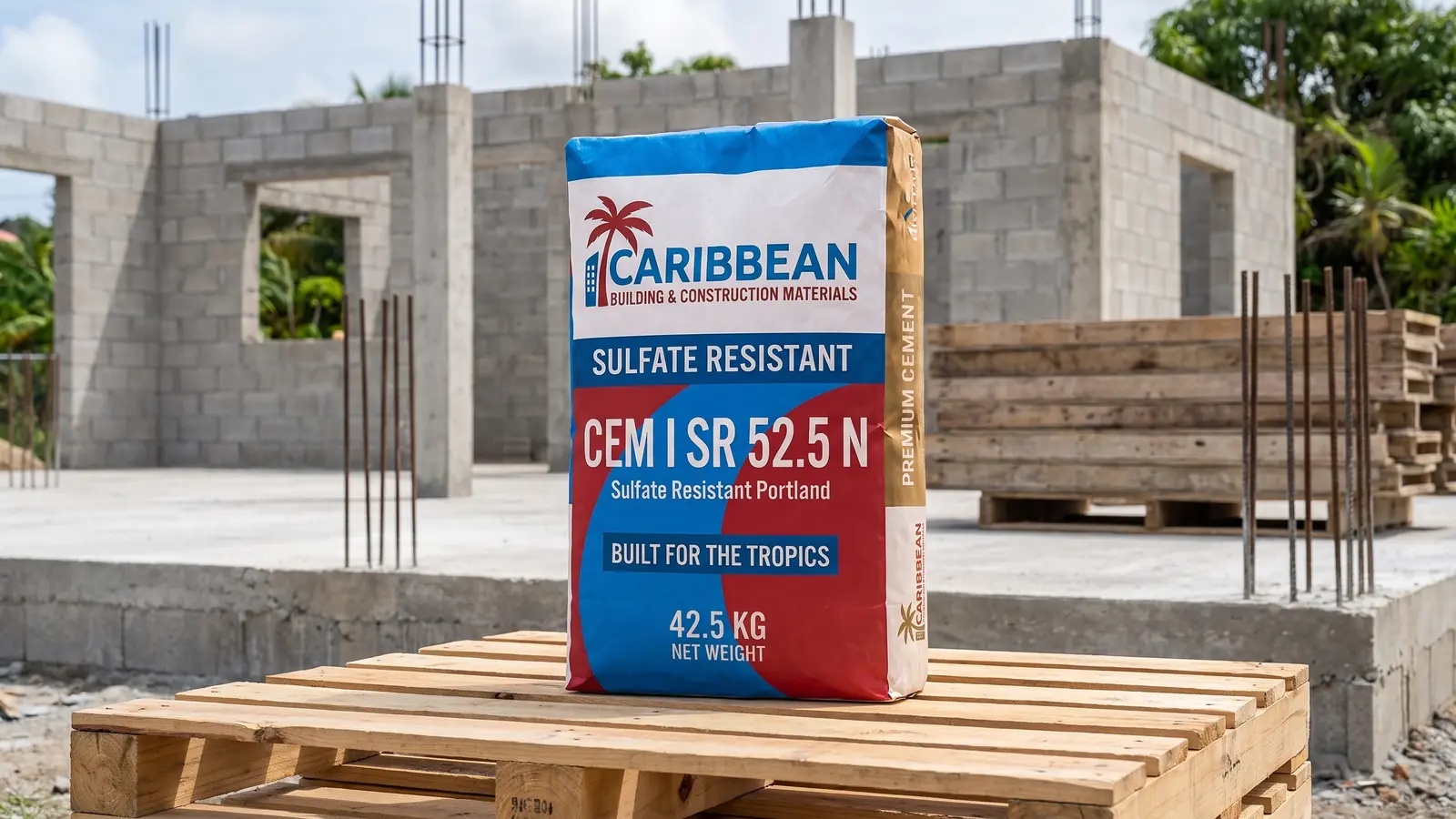
The family, class and letters each tell you something different.
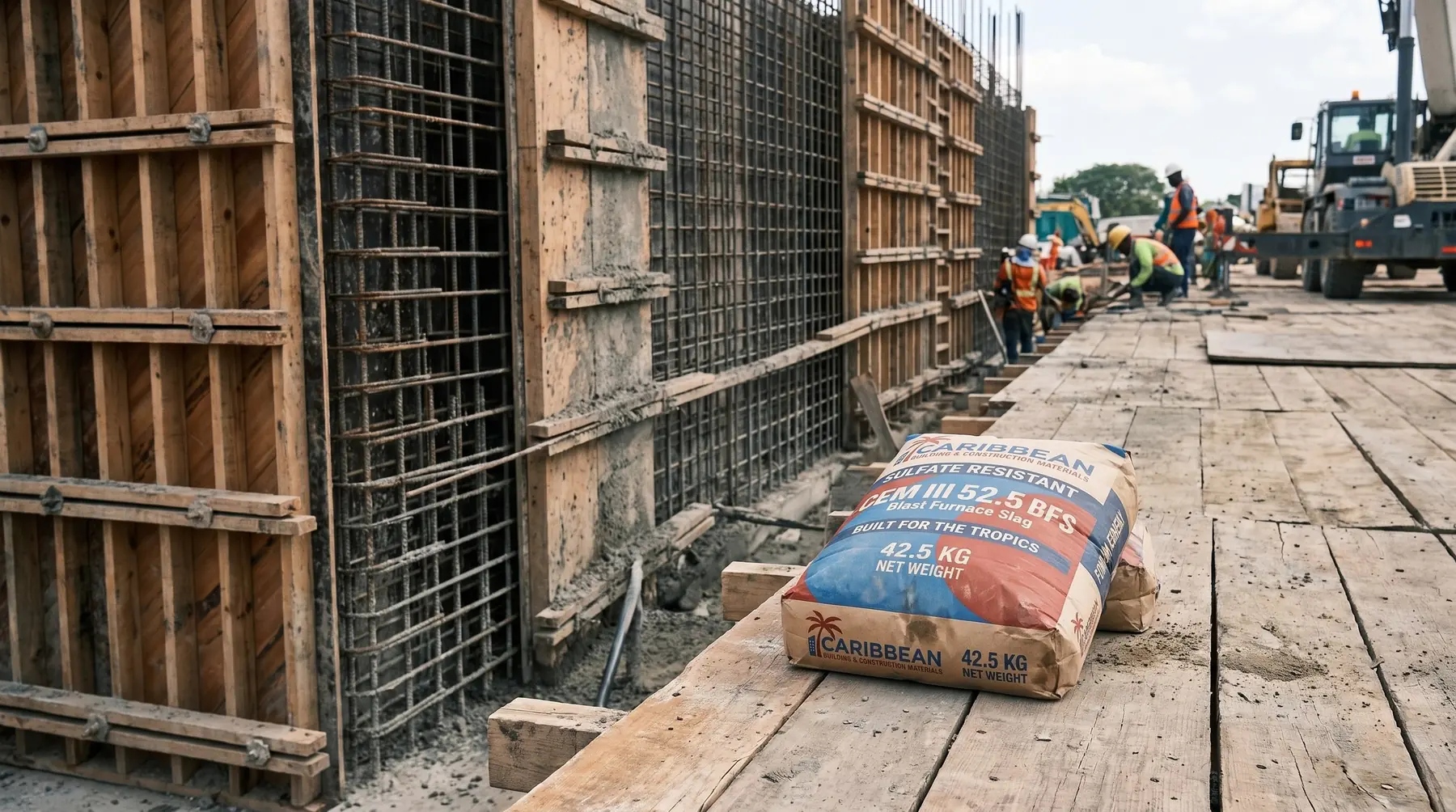
What water does in the mixture, and what curing protects afterward.
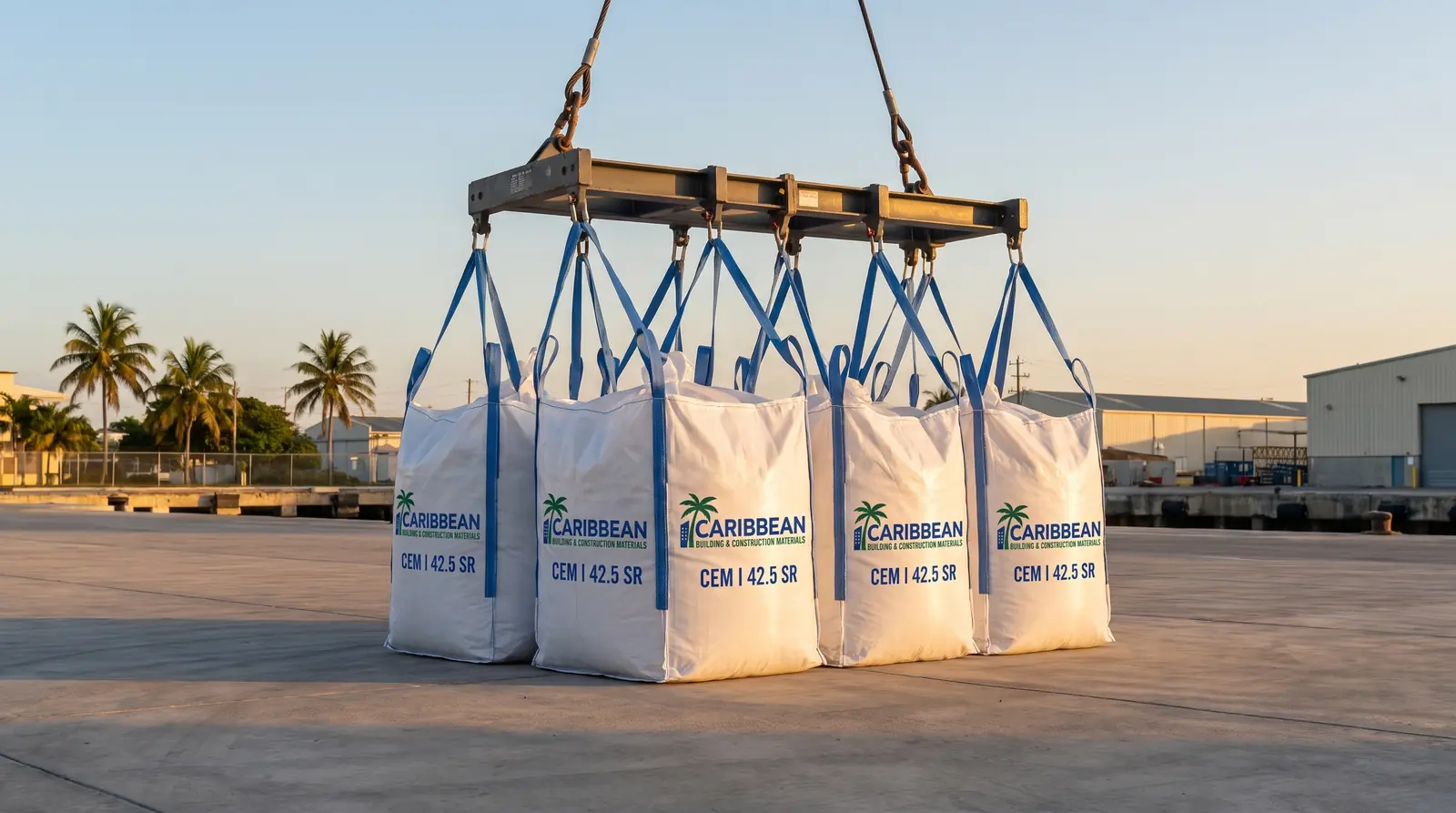
Cement, bagging, freight and receiving costs on a clear basis.
36 guides to explore
Cement is one ingredient used to make concrete and mortar. A bag of cement is a dry manufactured binder; it is not a bag of ready-to-use concrete.
Read guidePortland cement is made by heating prepared raw materials to produce clinker, then grinding it with gypsum and other specified constituents. The finished cement is packed for supply.
Read guideThe ingredients in a cement have different jobs. Read the full product designation and technical information before treating two bags as the same material.
Read guideSlag cement is made from carefully processed blast-furnace slag. It can be supplied as a cementitious material or incorporated into a manufactured blended cement.
Read guidePozzolans are materials used with cement that can contribute to the binding system through chemical reaction. Their suitability depends on the material, its processing and the applicable specification.
Read guideBlended cement is not automatically lower-quality cement. It is a manufactured product whose composition and performance should be judged against its specification and intended use.
Read guideCEM I and CEM II describe different cement families. The distinction concerns what the cement contains; you also need the rest of the designation to understand its strength class and other declared properties.
Read guideType IS and Type IL are different blended-cement designations. Type IS identifies a Portland blast-furnace slag cement; Type IL identifies a Portland-limestone cement. Both belong to ASTM C595, but the names describe different compositions.
Read guideThe number 42.5 in an EN cement designation is a strength class. The number 42.5 kg printed as the bag weight is the net mass of cement. They answer different questions.
Read guideASTM and EN are different specification systems. A familiar strength number or a similar ingredient does not establish that one cement can automatically replace another.
Read guideA higher cement strength class is not automatically the right choice for every order. The correct purchase matches the project's or customer's specification and the performance required from the concrete.
Read guideN, R and SR are parts of a cement designation. They describe specific declared properties in the relevant standard, so keep them attached to the product name when requesting or comparing a quote.
Read guideThe full cement name is a compact specification. Keeping every part of it on the inquiry, quotation and product documents helps avoid a substitution you did not intend.
Read guideSulfate-resistant cement addresses a particular exposure concern. It should be selected and documented as part of the concrete specification, rather than treated as a general guarantee against all chemical or coastal damage.
Read guideCement hardens through a chemical reaction with water called hydration. Concrete curing protects the moisture and temperature conditions that allow this reaction to develop the intended properties. Letting fresh concrete dry out quickly can work against that process.
Read guideWater can sometimes be added to ready-mixed concrete within the approved mixture's limits. Uncontrolled extra water is a different matter and can reduce the concrete's performance.
Read guideSetting, hardening and working time describe related but different stages. A laboratory setting-time number on a cement sheet is not a guaranteed placing deadline for every concrete mixture.
Read guideWorkability describes how a concrete mixture can be handled, placed and finished for its intended use. Slump is a consistency measurement; it is not, on its own, a test of concrete strength.
Read guideA hot-weather pour needs planning for the concrete, crew and weather together. Air temperature alone does not describe the moisture-loss or handling conditions at the surface.
Read guideWater on fresh concrete can come from bleeding, rain or an intended curing process. These are different situations, and the finishing crew needs to respond to the actual surface condition.
Read guideCement bags should remain dry and protected until they are used. In humid or rainy conditions, sound storage and handling matter as much as the condition of the bag on delivery.
Read guideLumps or water-damaged bags deserve attention before the cement is used. Moisture exposure can affect product quality, and breaking a lump apart does not prove that the cement has its original performance.
Read guideCement storage life depends on the product, packaging and conditions. Follow the supplier's storage instructions, keep stock records and inspect the material before use.
Read guideFor coastal construction, the useful question is which exposure conditions the concrete must resist. A cement label alone cannot settle the durability of the complete structure.
Read guideWater and sand quality should be established through the applicable specification and evidence. A clear-looking water source or clean-looking pile of sand is not enough to approve it for a concrete mixture.
Read guideEarly concrete cracking can have several causes. The presence of a crack does not, by itself, prove that the cement was defective or that the concrete is acceptable.
Read guideA cement-mortar result of 6,870 psi does not mean every concrete made with that cement will reach 6,870 psi. The result describes a particular test, specimen and age.
Read guideA mill test certificate or certificate of analysis is useful when you can connect it to the exact product and supply being evaluated. A PDF with laboratory numbers is not enough on its own.
Read guideThe shipment documents should tell a consistent story about what was ordered, supplied and transported. The exact document set depends on the contract, destination and project requirements.
Read guideAcceptance depends on the destination and the project's requirements. Confirm the required cement standard, test documents and approvals for the country and project where the material will be used.
Read guideA metric tonne contains 1,000 kg. At 42.5 kg per bag, that is about 23.5294 bag-equivalents—but you order whole bags, not a fraction of a sealed bag.
Read guideChoose packaging around how you will receive, store and use or resell the cement. Bags, slings, pallets and jumbo bags describe different parts of that operation.
Read guideBreak-bulk and loose bulk describe different cargo arrangements. A shipment of cement in bags is not the same receiving operation as cement carried unpackaged in a vessel hold.
Read guideFOB and CIF allocate costs and responsibilities under the agreed trade rule. They do not mean the same thing, and paying freight to a destination does not necessarily mean risk stays with the seller until arrival.
Read guideOur bagged offer starts as low as US$7.95 per 42.5 kg bag, FOB Freeport, Bahamas, under contract. That includes the cement and bagging. Onward freight is separate and must be quoted for your shipment.
Read guideShared Shipping combines customer orders into a coordinated shipment, starting at 200 metric tonnes. Independent shipments are quoted separately, with a 2,500 MT minimum. The choice depends on quantity, destination and timing.
Read guideSend the specification, quantity and destination.