
Names & specifications
CEM I vs CEM II: what is the difference?
CEM I and CEM II describe different cement families. The distinction concerns what the cement contains; you also need the rest of the designation to understand its strength class and other declared properties.
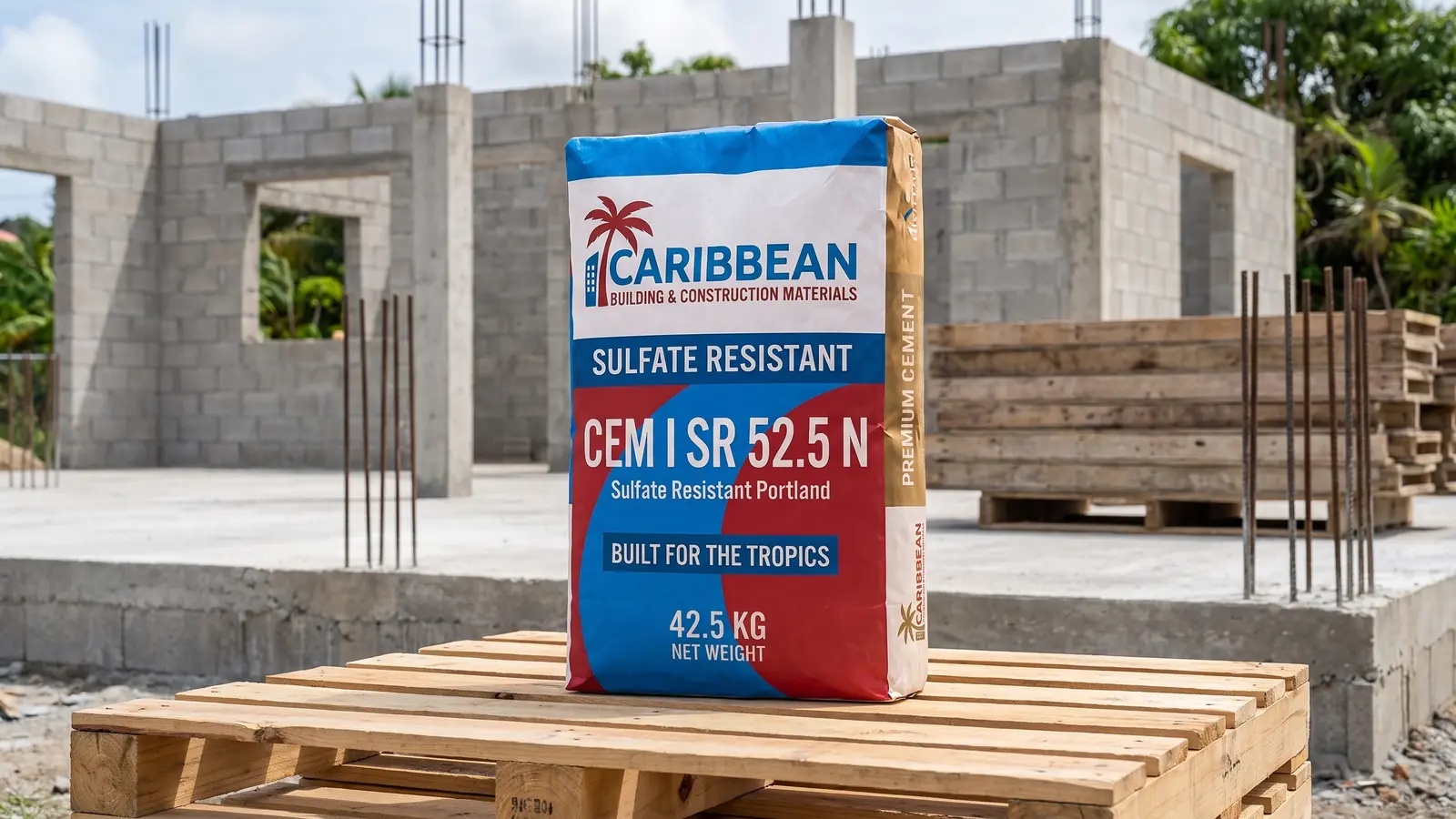
Start with the ingredients
CEM I is Portland cement. Its manufacture involves grinding clinker from the cement kiln with gypsum and other permitted minor components. Clinker is the material produced during the high-temperature part of cement manufacture.
CEM II is a broader family. Depending on the full designation, it contains other main constituents alongside clinker, such as limestone, slag or fly ash. That does not make every CEM II the same product. The letters after CEM II help identify the particular composition.
Think of “CEM II” as the start of a description. Before ordering, you need the complete name on the quotation and technical sheet.
Further detail: The Concrete Centre — Cementitious materials; The Concrete Society — Bagged cements
Read the whole name
For example, in CEM II/A-L 42.5 N, CEM II identifies the family; A-L identifies a Portland-limestone cement subtype; 42.5 is the cement strength class; N describes normal early-strength development. The number is unrelated to bag weight. The same designation may be supplied in different bag sizes or in bulk.
R denotes rapid early-strength development in relevant EN cement designations. Curing is still required. Concrete working time depends on the actual mixture and placing conditions.
Further detail: Irish Cement — Bulk CEM II; Heidelberg Materials — Bulk CEM I environmental product declaration; Irish Cement — Bulk CEM I; NRMCA/ASCC — Fresh Concrete Expectations Checklist
Is one automatically stronger or better?
The family name alone does not answer that. Read the class and product results, then check what the job requires. Switching between cements can change setting behavior, water demand and strength development. Even products with familiar names can behave differently enough to matter to a concrete producer or contractor.
There is another distinction worth keeping clear: a cement laboratory result is not the strength of every concrete made with that cement. The sand, stone, water, proportions, curing and concrete test method all form part of the finished concrete's performance. ASTM expressly cautions against using its cement-mortar test result as a direct prediction of concrete strength.
Further detail: The Concrete Society — Bagged cements; ASTM C109/C109M-26 public scope
Before changing the cement in an order
Ask for the exact product designation and current technical information. Compare these with the project's requested standard and product requirements. If a substitution is proposed, let the responsible project team confirm acceptance and any mixture evaluation needed. Concrete producers should also consider changes to fresh-concrete behavior when materials change.
For a distributor, the useful question is: “Does this product match what my customers and their projects specify?” For a contractor, it is: “Can the approved concrete mixture and construction process achieve the required performance with this product?”
Further detail: NRMCA/ASCC — Fresh Concrete Expectations Checklist
Common question
Is CEM II automatically weaker than CEM I?
No. Compare the full designation, class, product evidence and intended application rather than ranking only the family names.