Names & specifications
What do N, R and SR mean on a cement bag?
N, R and SR are parts of a cement designation. They describe specific declared properties in the relevant standard, so keep them attached to the product name when requesting or comparing a quote.
N and R concern early strength
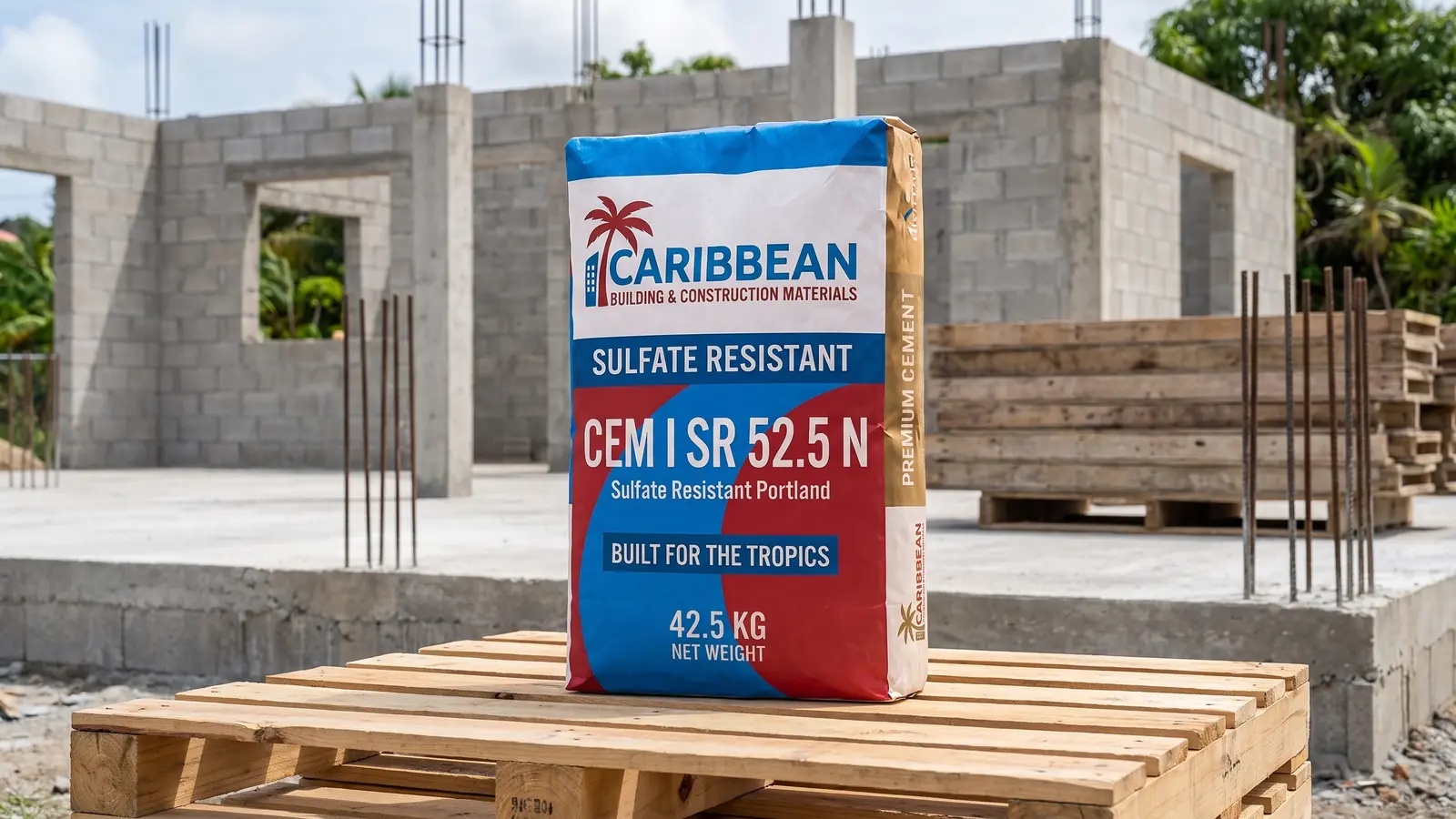
In relevant EN cement designations, N denotes normal early-strength development and R denotes rapid early-strength development. These suffixes add information to the class and family name; they are not bag sizes or order quantities.
Early-strength development and concrete working time are different properties. Check the product data and the actual concrete mixture.
Further detail: Irish Cement — Bulk CEM I; Heidelberg Materials — Bulk CEM I environmental product declaration
SR concerns sulfate resistance
SR indicates a sulfate-resistant designation in the relevant system. Some products include an additional category such as SR 3 or SR 5. Preserve the full requirement when the specification names it; do not shorten a precise requested product to “SR cement.”
Other standards use their own types or modifiers for sulfate resistance. These should not be treated as automatically equivalent labels.
Further detail: American Cement Association — Types of cement
SR does not settle every coastal question
Concrete near the sea may face chloride-related corrosion of reinforcement as well as other exposure conditions. A sulfate-resistance designation alone does not describe the complete durability of that concrete.
Keep the full cement name and property suffixes on the quotation. Ask the project team to confirm the exposure requirements and the documents needed to show that the product meets them.
Further detail: NRMCA CIP 25 — Corrosion of steel in concrete
Common question
Does R mean I can skip curing?
No. Rapid early-strength development is not a substitute for the specified concrete curing process.