
Cement basics
Clinker, gypsum, limestone and slag: what does each ingredient do?
The ingredients in a cement have different jobs. Read the full product designation and technical information before treating two bags as the same material.
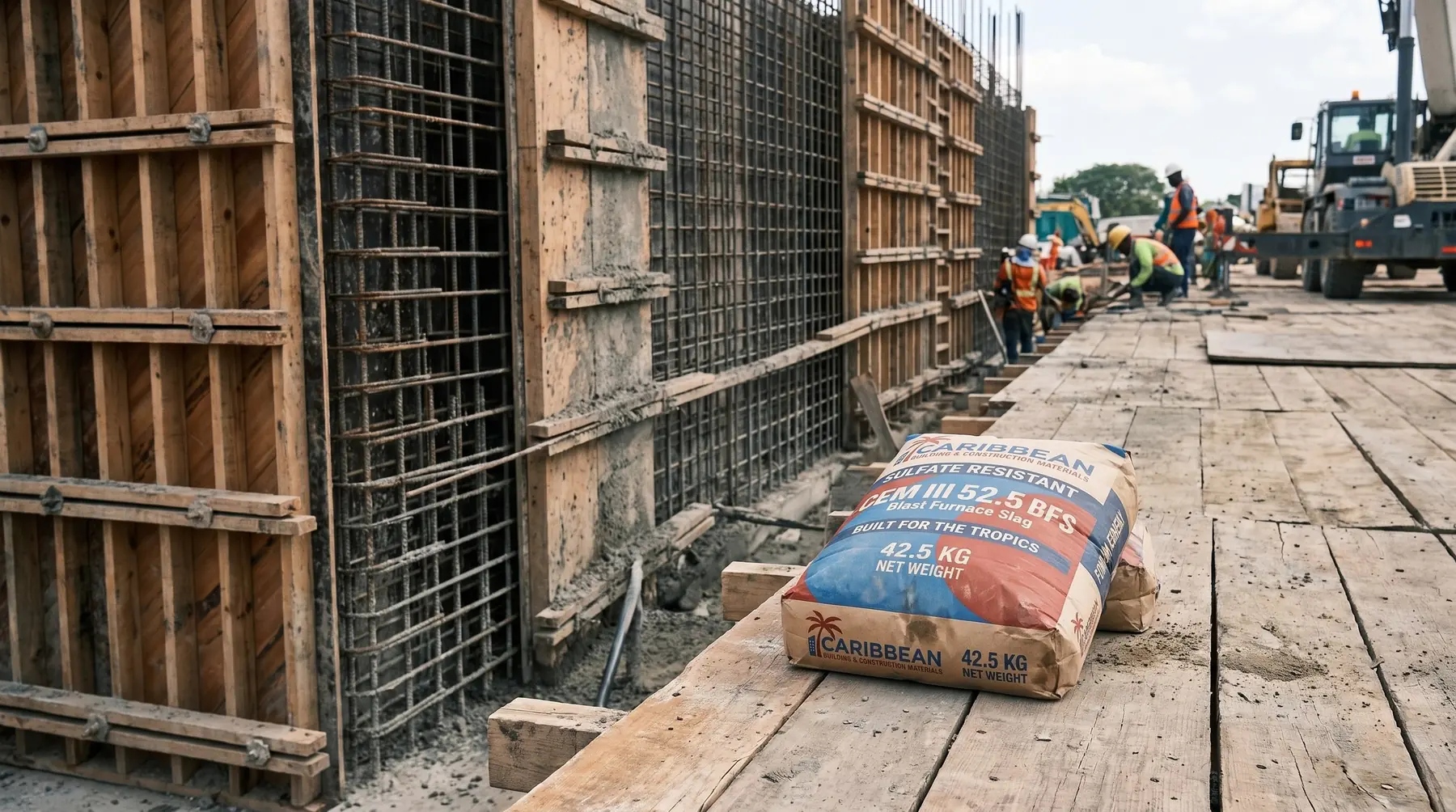
Clinker and the control of setting
Clinker comes from the high-temperature manufacturing stage. It is ground into the finished cement with gypsum or other permitted constituents. The product's composition is controlled during manufacture; the buyer should not try to recreate it by adding powders on site.
The cement's ingredient list is only part of its description. Fineness, chemistry and the resulting tested properties also matter, which is why a product sheet includes more than a name.
Further detail: American Cement Association — How cement is made
Limestone, slag and pozzolans
Finely ground limestone is a specified constituent in some cements. Portland-limestone cement is manufactured as a complete product; its performance is evaluated as that product, rather than assuming that limestone is simply an arbitrary filler.
Slag cement uses processed granulated blast-furnace slag. Pozzolans are another group of materials used with cement; natural and processed sources exist. Each material must meet the applicable specification.
Further detail: NRMCA CIP 45 — Portland-limestone cement; NRMCA CIP 30 — Supplementary cementitious materials
Compare the finished product
Ask which standard and full designation apply, what the product data reports and what documentation will accompany supply. Then compare those with the intended use.
If a product changes, the concrete producer may need to evaluate its mixture again. A familiar bag weight or a similar colour does not demonstrate that two cements will have identical behavior. The useful purchasing question is whether the finished product meets the agreed requirement, with evidence that belongs to that product.
Common question
Does limestone in a cement mean it was watered down?
No. Some standards define manufactured cements containing limestone. Evaluate the finished product and its evidence against the requirement.